


Okay, gather ’round, because I’m about to share something truly special with you. It’s more than just a recipe; it’s a feeling. It’s that deep, soul-warming comfort you get when the weather outside is a little bit frightful, or maybe you’ve just had one of *those* days where you need a serious culinary hug. I’m talking about French onion soup. Now, I know what you might be thinking: “French onion soup? Isn’t that complicated?” And for a long time, I thought so too! But I’ve spent years tinkering, tasting, and yes, even making a few “oops” moments in the kitchen, to finally land on this version. This is the French onion soup that makes my whole house smell like pure heaven, the one my family begs for, and the one that always, always makes everything feel a little bit better. It’s like the sophisticated, grown-up cousin of grilled cheese, but with an elegance that feels so satisfying. Forget those watery, bland versions you might have tried; this one is rich, deeply flavored, and surprisingly achievable. We’re talking about a journey of sweet, caramelized onions, a robust broth, and that glorious, gooey, cheesy crust that makes you want to do a little happy dance.
What is French onion soup?
So, what exactly *is* this magical concoction we call French onion soup? At its heart, it’s a humble soup that’s elevated to culinary greatness through patience and good ingredients. Think of it as the ultimate celebration of the onion. We take sweet onions, caramelize them slowly until they’re impossibly tender and deeply sweet, then we simmer them in a rich beef or vegetable broth until all those flavors meld together. The real drama, though, happens at the end. We ladle this fragrant soup into oven-safe bowls, top it with a sturdy piece of toasted bread (usually a baguette), and then we smother it all in a generous blanket of Gruyère cheese. Pop it under the broiler until it’s bubbly, golden, and utterly irresistible. It’s that simple, yet that profound. The name “French onion soup” itself hints at its origins, likely dating back to 18th-century France, where it was a staple for its affordability and comforting qualities. It’s essentially a testament to how simple ingredients, treated with care, can create something truly extraordinary.
Why you’ll love this recipe?
Let me tell you why this French onion soup recipe has become my absolute go-to, the one I’m always excited to share. Firstly, the FLAVOR. Oh, the flavor! It’s this incredible symphony of sweet, savory, and umami notes. The slow caramelization of the onions unlocks a natural sweetness that is just out of this world, and when it melds with the rich broth and that salty, nutty Gruyère cheese, it’s pure bliss. It’s the kind of flavor that makes you close your eyes with the first spoonful. Secondly, SIMPLICITY. I know, I know, “slowly caramelizing onions” can sound daunting, but trust me, this recipe is far easier than you think. The process is mostly hands-off simmering and watchful stirring. Once you get the hang of it, it’s almost meditative. It’s also incredibly COST-EFFECTIVE! Onions, broth, bread, and cheese – these are all relatively budget-friendly ingredients, especially when you consider the restaurant-quality taste you’re achieving at home. This soup is perfect for feeding a crowd without breaking the bank. And VERSATILITY! While this recipe is classic, you can absolutely play with it. Use vegetable broth for a vegetarian version, experiment with different cheeses, or even add a splash of brandy for an extra layer of depth. What I love most about this recipe is that it feels like a special occasion meal, but it’s actually surprisingly achievable on a weeknight if you plan a little. It’s the ultimate comfort food that doesn’t demand hours of active cooking time, making it a lifesaver when you want something truly satisfying without all the fuss. It’s also a fantastic way to use up that slightly sad-looking baguette that’s been hanging around too long!
How do I make French onion soup?
Quick Overview
Making this French onion soup is all about patience and building layers of flavor. We’ll start by slowly caramelizing a mountain of onions until they’re deeply golden and sweet. Then, we’ll deglaze the pan to capture all those delicious bits, add a rich broth, and let it simmer to perfection. The grand finale involves toasting some bread, topping it with cheese, and broiling it until it’s a molten, bubbly masterpiece. It’s a simple, rewarding process that yields incredible results. The key is to let those onions do their thing – don’t rush them!
Ingredients
For the Onions: What is the meaning of the word “for the onions”?
– 4-5 pounds yellow onions, thinly sliced (about 8-10 cups). Yes, that’s a lot, but trust me, they cook down! I always go for yellow onions; they have the best balance of sweetness and tang for this soup.
– 4 tablespoons unsalted butter. I like the flavor of butter here, but you can use a mix of butter and olive oil if you prefer.
– 2 tablespoons olive oil. Helps prevent the butter from burning and adds another layer of flavor.
– 1 teaspoon granulated sugar (optional, but it really helps kickstart the caramelization!).
For the Broth:
– 1 teaspoon salt, plus more to taste.
– 1/2 teaspoon freshly ground black pepper, plus more to taste.
– 2 tablespoons all-purpose flour. This helps thicken the soup just slightly and adds body.
– 1/2 cup dry white wine (like Sauvignon Blanc or Pinot Grigio) or dry sherry. This adds an amazing depth of flavor, but you can skip it if you prefer.
– 8 cups beef broth (high quality is key!). If you want a vegetarian option, use a robust mushroom or vegetable broth.
– 2 sprigs fresh thyme.
For the Topping:
– 1 baguette, sliced into 1-inch thick rounds.
– 1-2 cups grated Gruyère cheese (or a mix of Gruyère and Swiss). This is non-negotiable for that classic flavor!
Step-by-Step Instructions
Step 1: Preheat & Prep Pan
First things first, grab a large, heavy-bottomed pot or Dutch oven. This is where all the onion magic will happen. You want something that distributes heat evenly and can handle a good amount of onions. Make sure it’s clean and ready to go!
Step 2: Mix Dry Ingredients
In a small bowl, whisk together the 2 tablespoons of all-purpose flour with about 1/4 cup of the beef broth. This creates a smooth slurry that will help thicken our soup later without any lumps. Set this aside for now.
Step 3: Mix Wet Ingredients
This isn’t so much about mixing wet ingredients as it is about preparing the liquids that will form our flavorful broth. Have your wine (if using), the remaining beef broth, and your thyme sprigs measured out and ready. The beef broth is the backbone of this soup, so using a good quality one really makes a difference.
Step 4: Combine
This step is actually all about the onions, which we’ll be cooking down. Place the thinly sliced onions in your pot. Add the butter and olive oil, along with the optional teaspoon of sugar. Stir everything together well to coat the onions. We’re not combining wet and dry yet, but rather preparing to slowly cook down the star of the show – the onions!
Step 5: Prepare Filling
As the onions cook, we’ll deglaze and build the broth. Once the onions are beautifully caramelized and a deep golden brown, we’ll add the white wine (if using) to deglaze the pan, scraping up all those delicious browned bits from the bottom. Then we’ll add the beef broth, the reserved flour slurry, and the thyme sprigs. Let this all simmer gently.
Step 6: Layer & Swirl
This step is for assembling the soup in the bowls before broiling. Ladle the hot soup into oven-safe bowls. Place a slice or two of toasted baguette on top of the soup. Make sure the bread sits on the surface; it will soak up some of the broth and become delightfully soft yet sturdy.
Step 7: Bake
Now for the best part! Generously pile the grated Gruyère cheese over the baguette. You want it to fully cover the bread and spill slightly over the edges. Place the bowls on a baking sheet (this catches any rogue cheese drips and makes them easier to handle). Broil for 2-4 minutes, or until the cheese is melted, bubbly, and beautifully golden brown. Keep a very close eye on it, as it can go from perfect to burnt in seconds!
Step 8: Cool & Glaze
Carefully remove the baking sheet from the oven. Let the soup bowls sit for just a minute or two before serving – that molten cheese is seriously hot! There’s no “glaze” in the traditional sense for French onion soup; the melted cheese *is* the glorious topping.
Step 9: Slice & Serve
Serve immediately while the cheese is still gooey and the soup is piping hot. Warn your guests (or yourself!) about the hot bowls and molten cheese. The aroma alone will make everyone happy!
What to Serve It With
French onion soup is practically a meal in itself, but it can also be part of a larger feast! For a simple, comforting BREAKFAST, I love having a smaller bowl alongside some crusty bread (maybe not the baguette again, but a good sourdough!). It feels so luxurious to start the day like that. When I’m hosting BRUNCH, I often serve it as a starter. It’s elegant and satisfying without being too heavy. Pair it with a light green salad with a vinaigrette, or perhaps some mini quiches. It always feels so sophisticated. As a DESSERT course, this might sound a bit unconventional, but hear me out! A small, perfectly made bowl of French onion soup can be an incredible savory note after a sweet meal, especially if you’re having a more formal dinner party. It’s a delightful surprise. For COZY SNACKS, especially on a chilly evening, a bowl of this with maybe some simple crackers on the side is pure perfection. It’s the ultimate comfort food that’s both hearty and delicious. My kids actually love dipping apple slices into the broth after the cheese is gone – it’s a weird but true family tradition!
Top Tips for Perfecting Your French Onion Soup
Okay, let’s talk about those little secrets that take this soup from good to absolutely unforgettable. First, **Onion Prep:** Don’t be afraid of the quantity! Those 4-5 pounds of onions might seem excessive, but they cook down by at least two-thirds. Slice them thinly and uniformly so they cook evenly. I often use a mandoline for this, but a sharp knife works just fine if you’re careful. For **Mixing Advice**, the key is patience during caramelization. Don’t crank up the heat to speed things up; that just burns the onions. Keep the heat at medium-low and stir frequently, scraping the bottom of the pot. This develops that deep, sweet flavor without bitterness. When you add the flour, stir it in and let it cook for a minute or two – this gets rid of the raw flour taste. For the **Broth**, a good quality beef broth is crucial. If you can find a homemade-style one, fantastic! If not, look for low-sodium options so you can control the saltiness. And definitely don’t skip the wine if you can help it; even a small amount adds so much complexity. For **Ingredient Swaps**, while Gruyère is king, don’t be afraid to mix it with a sharp white cheddar or even a bit of Parmesan for extra zing. For **Baking Tips**, make sure your bowls are oven-safe! I learned that the hard way once. Use a baking sheet underneath to catch any bubbling cheese – it saves you a lot of cleanup. And keep an eye on the broiler; it works fast! For **Glaze Variations**, well, there isn’t really a glaze here, but if you want to add something extra *before* the cheese, a tiny splash of brandy or cognac can be amazing. Just let it bubble off before adding the broth. I’ve also found that adding a bay leaf along with the thyme during the simmering stage can add another subtle layer of flavor.
Storing and Reheating Tips
This French onion soup is wonderfully forgiving, and leftovers are a real treat! For **Room Temperature Storage**, it’s best to store any leftovers in the refrigerator. The soup itself is quite rich and can spoil if left out for too long, especially with the cheese topping. For **Refrigerator Storage**, let the soup cool completely before transferring it to airtight containers. It will last for about 3-4 days in the fridge. The soup will thicken as it cools, which is totally normal. For **Freezer Instructions**, French onion soup freezes surprisingly well, but I usually freeze it *without* the bread and cheese topping. Once the soup is cooled, ladle it into freezer-safe containers or bags, leaving a little headspace for expansion. It can stay frozen for up to 3 months. When you’re ready to reheat, thaw it overnight in the refrigerator. Reheat gently on the stovetop or in the microwave until hot. For the **Glaze Timing Advice** (meaning the cheese topping), it’s always best to add the bread and cheese *just* before you plan to serve and broil it. This way, you get that perfectly melted, gooey crust without soggy bread. If you’re reheating previously made bowls, you might need to add fresh bread and cheese before broiling again.
Frequently Asked Questions
Final Thoughts
So there you have it, my absolute favorite French onion soup. It’s more than just a recipe; it’s a journey through comfort, warmth, and incredible flavor. I truly believe that anyone can master this soup and bring a little bit of Parisian bistro magic into their own kitchen. It’s the perfect dish for a cozy night in, a special occasion, or anytime you need a culinary embrace. If you love this hearty, soul-satisfying soup, you might also enjoy my recipe for [link to another relevant soup recipe here, e.g., Creamy Tomato Basil Soup] or my [link to another relevant recipe here, e.g., Classic French Bread]. Don’t be intimidated by the caramelization process – just remember to be patient, and the results will be so worth it. I can’t wait to hear how yours turns out! Please leave a comment below and let me know your thoughts, or share your own favorite tips and variations. Happy cooking, everyone!

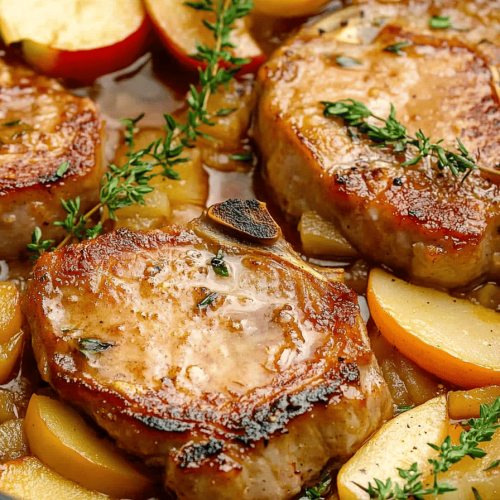
French Onion Pork Chops
Ingredients
Main Ingredients
- 2 large yellow onions halved and sliced vertically into 0.25 inch slices
- 4 tablespoons unsalted butter
- 1.25 cups reduced sodium beef broth divided
- 1 tablespoon olive oil
- 4 pieces boneless pork chops 1 to 1.5 inches thick
- 1 teaspoon salt
- 0.5 teaspoon freshly ground black pepper
- 0.5 teaspoon garlic powder or 1 teaspoon fresh garlic minced
- 0.5 teaspoon dried thyme or 2 sprigs fresh thyme
- 0.25 teaspoon dried rosemary or 2 sprigs fresh rosemary
- 1 tablespoon all-purpose flour
- 0.75 cups dry white wine sauvignon blanc, pinot grigio, or Chardonnay
- 0.25 cups Gruyere cheese finely shredded
- 0.25 cups Swiss cheese finely shredded
Instructions
Preparation Steps
- In a large, heavy-bottom skillet, melt butter over medium heat. Add the onions and cook, stirring frequently, until the butter melts and onions soften, about 5 minutes.
- Reduce heat to medium-low; add 0.25 cups reduced sodium beef broth and simmer until onions begin to caramelize, about 15 to 20 minutes (Option 1) or 30 to 45 minutes for deeper caramelization (Option 2). Stir intermittently.
- Season pork chops evenly with salt, black pepper, garlic powder, thyme, and rosemary on both sides.
- For Option 1: While onions caramelize, heat olive oil in a separate skillet over medium-high heat. Sear pork chops 3 minutes per side until browned; remove and set aside.
- For Option 2: After onions finish caramelizing in one skillet, remove onions and set aside. Add olive oil to skillet and sear pork chops 3 minutes per side; remove and set aside.
- Add flour to pan juices and cook over medium-high heat, whisking constantly for 1 minute to form a roux.
- Slowly whisk in remaining 1 cup beef broth and dry white wine. Stir to combine and bring to a simmer, being careful as mixture can bubble vigorously.
- Return the caramelized onions to the skillet and stir to coat with the broth and wine sauce.
- Nestle pork chops into the onions, sprinkle Gruyere and Swiss cheese evenly over the pork chops, cover, and simmer over medium-low heat for 10 minutes until pork is cooked through and cheese is melted.
- Check pork temperature with a meat thermometer; it should read 145°F at the thickest part. Remove pork chops at around 140°F and let rest covered for carryover cooking to 145°F.
- Serve warm. Leftovers keep airtight in the fridge up to 5 days or frozen for 3-4 months.